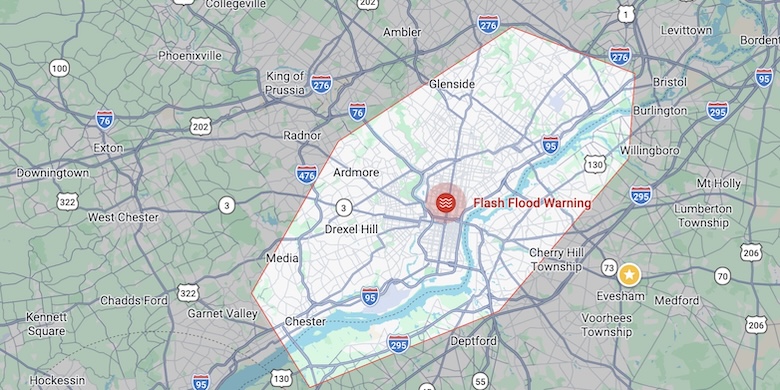
On July 6th, much of our area experienced massive rainfall and flash flooding. Street and municipal drainage pumps usually cannot handle severe flash flooding. Because flash floods dump massive amounts of water in a very short time, they rapidly overwhelm the physical capacity of storm sewers and pumps, turning roads into rivers. Municipal pumps have a maximum flow rate (e.g., removing a half-inch of water per hour). Flash floods often exceed this capacity in minutes. Storm
drains feed into local bodies of water. If rivers or oceans are already swollen, the pumps cannot discharge the street water anywhere. Rushing water sweeps away grass, leaves, and trash, which quickly blocks the catch basins and pump intakes, drastically reducing their efficiency. Route 38 (Cherry Hill): Stretches of this major thoroughfare are completely overwhelmed by rainwater, backing up traffic for miles and stalling vehicles. Route 38 (Cherry Hill): Stretches of this major thoroughfare are completely overwhelmed by rainwater, backing up traffic for miles and stalling vehicles Route 130 (Pennsauken): According to the New Jersey Department of Transportation, significant flooding has forced lane closures in both directions near Route 70. Route 30 / Ben Franklin Bridge: Flooding has shut down lanes in both directions approaching the bridge in Camden. Interstate 295: Motorists are advised to expect severe delays and deep water pooling between mile markers 13 and 28.