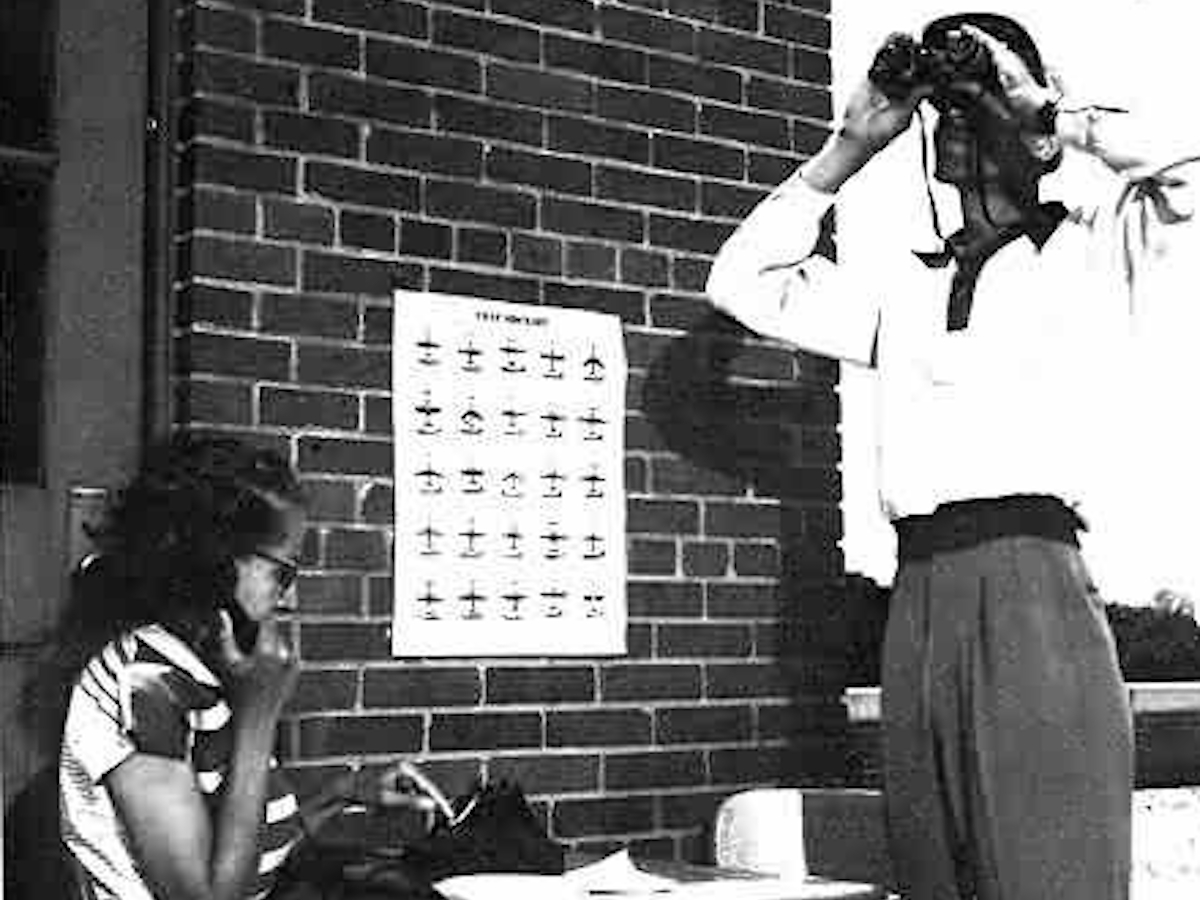
During WWII, the east and west coasts of the United States were protected by civilian volunteer aircraft spotters, members of the Ground Observer Corps. The GOC was a component of the Aircraft Warning Service
 Merchantville Online
Where Community Begins...
Merchantville Online
Where Community Begins...

During WWII, the east and west coasts of the United States were protected by civilian volunteer aircraft spotters, members of the Ground Observer Corps. The GOC was a component of the Aircraft Warning Service

On October 17, 2018 the Merchantville Historical Society met for their annual meeting with a presentation of Eagle Scout Zachary Moore's documentary "The Voices of Merchantville". Zachary showcased his presentation -
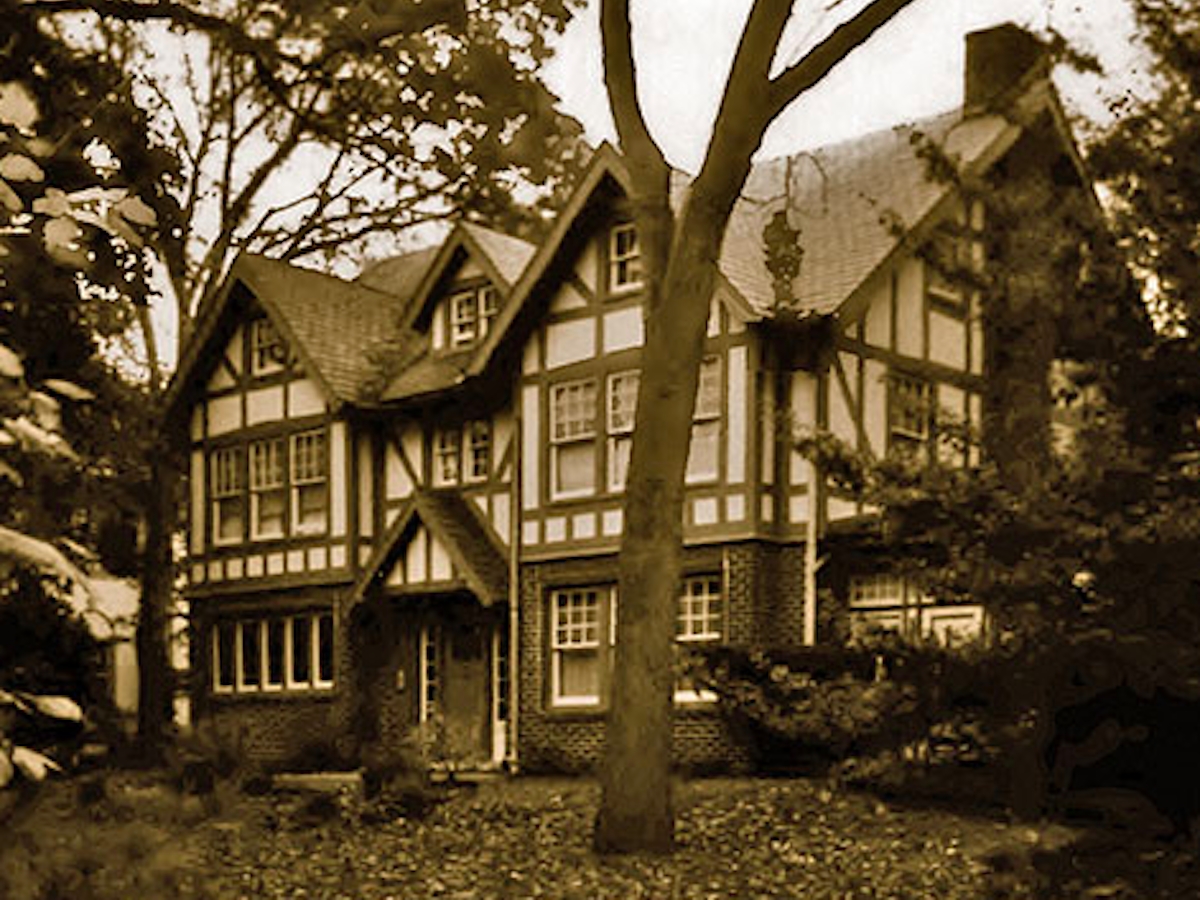
The Oaks Historic District was listed on the National Register of Historic Places in 1997. "The Oaks," located in Merchantville, New Jersey, is a planned neighborhood of upscale, early-twentieth century suburban houses envisioned by landscape architect George E. Rhedemeyer and developed by the Oaks Realty Company which he formed in 1910. Designed during the early years of the automobile age and for the most part, before the First World War, The Oaks became Merchantville's twentieth-century showcase and its gateway for vehicular traffic entering the Borough from Wellwood Avenue, later renamed Browning Road, and includes 320 W. Maple Ave., 101-201 (odd numbers) Browning Rd, 308-318 (even numbers) Volan St., and 1-3 Oak Terrace. The Oaks Historic District contains an assemblage of the period's revival styles, several representatives of which were designed by Arnold H. Moses, long-time Merchantville resident and the Borough's most prolific architect during the first quarter of the twentieth century. Because The Oaks contains a concentrated group of Merchantville's most fashionable residences associated with the automobile age of the Borough's developmental history, and the resources reflect the discrete plan laid out by Rhedemeyer and the architectural work of Moses, the district is eligible for the National Register of Historic Places. The period of significance begins with Rhedemeyer's acquisition of the land in 1909 and terminates around 1937 when the last of the initial homes in The Oaks was built. Photograph by Carol Benenson Perloff, 1996.
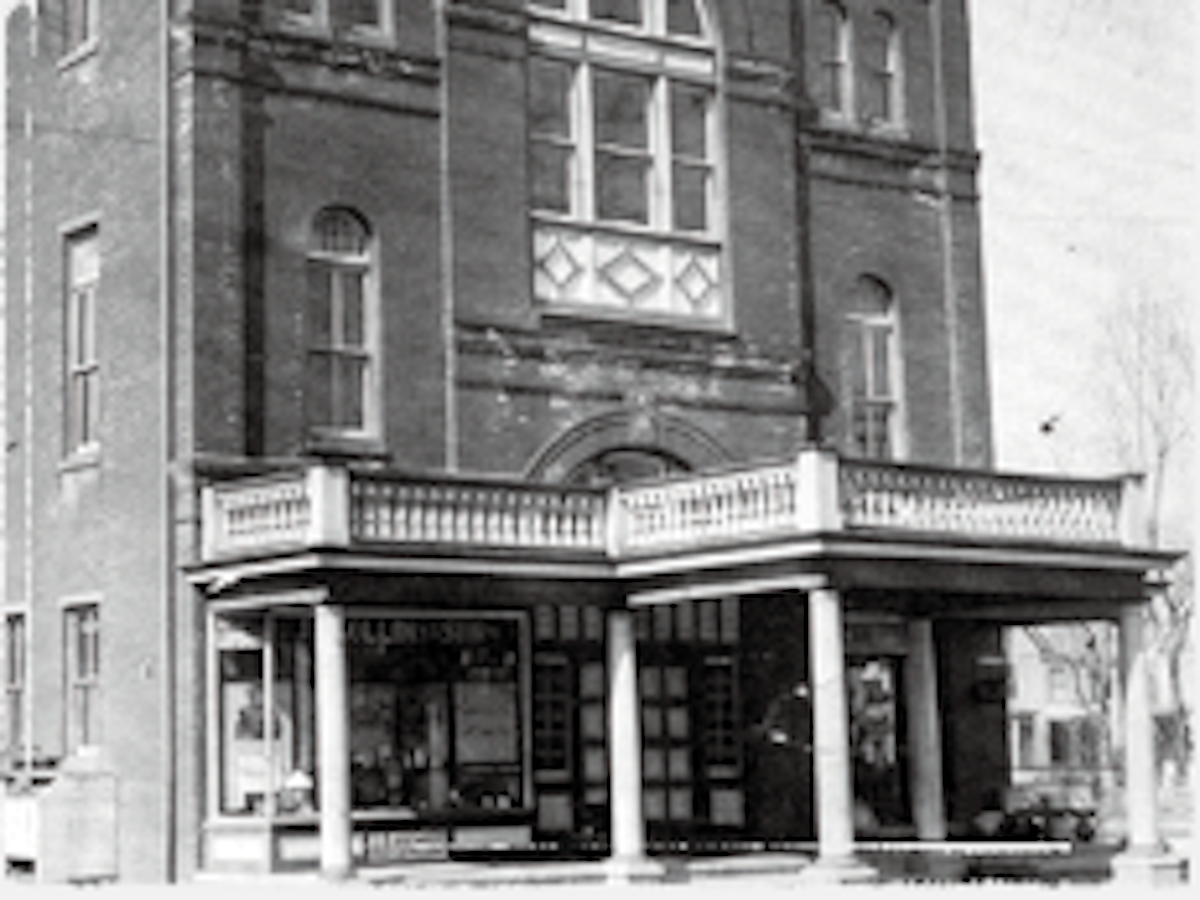
Completed in 1893, Collins-Pancoast Hall was home to both a building supply business and also served as a community meeting place and performing arts venue. John S. Collins, a sixth-generation Collins dating back to
The village prior to 1850 contained only the buildings of the farm and tenant-houses of the Rudderow family. Soon after that time Alexander G. Cattell purchased theplot of ground containing the old house built by John Rudderow in 1804, which he tore down and erected on its site his residence. In 1856 Amos Rudderow, whoowned the farm, sold to Jacob Bunting, ten acres of land on tlie south side of the pike, for the purpose of laying it out into lots. He erected a house, now the property of Mr. Whickall, a spice merchant of Philadelphia. Soon after the Hon. A. G. and E. G. Cattell, John Loutz and David E. Stetson purchase*! twenty acres of land on the uorth side of the pike, where each erected a mansion. Iu 1858 the same persons bought seventy-five acres, the balance of the Amos Rudderow farm. About the same time A. G. and E. G.
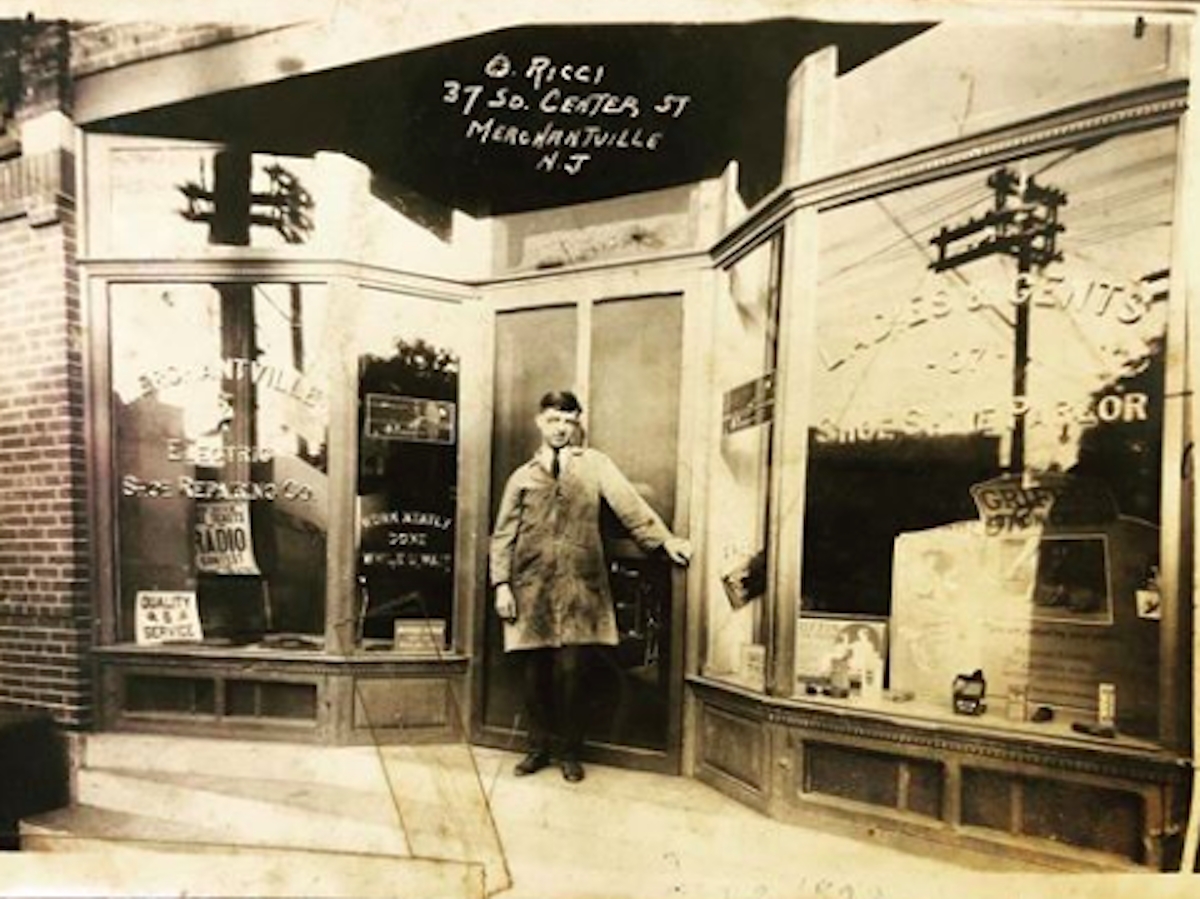
Merchantville Antiques and Salvage came across a photo of his grandfather's Shoe Repair Shop the other day. The picture, taken in 1928, shows shop owner Orlando Ricci posing in front of his storefront. Upon finding this treasure, Michael and Jaclyn Ricci remarked on how amazing it is to think that in a couple years their family will have lived here for 100 years. Truly, one of the most valuable characteristics of Merchantville life is the rich history of each generation owning a small business at 37 South Centre - from shoe repair shop to luncheonette to dress shop, and now their antiques and lamp repair shop.