

Easter is a Christian holiday that celebrates the belief in the resurrection of Jesus Christ. The holiday concludes the “Passion of Christ,” a series of events and holidays that begins with Lent—a 40-day period of fasting, prayer and sacrifice—and ends with Holy Week, which includes Holy Thursday - The Last Supper, Good Friday - The Crucifixion, and Easter Sunday. Although a holiday of high religious significance in the Christian faith, many traditions
associated with Easter date back to pre-Christian, pagan times.
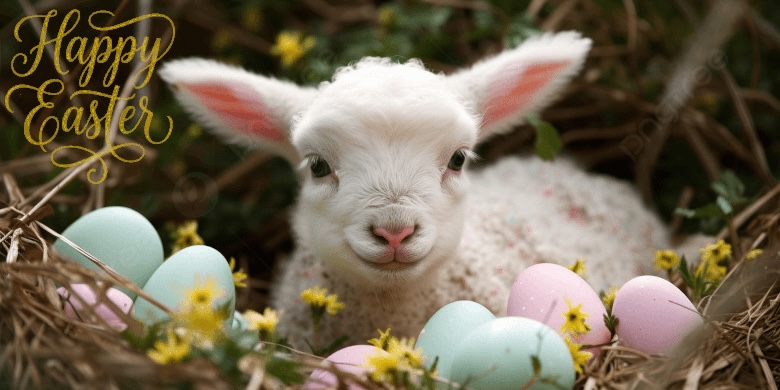
The lamb is a symbol that is always associated to Jesus. In fact, He is always compared to a gentle and kind lamb, who sacrificed himself for all men.
The symbolism of the lamb is obviously more complex than that, and was already present in the Bible before Jesus arrival. The lamb has always represented the purest and more beautiful sacrificial victim, destined to be offered as a sacrifice to God. In the New Testament, the image of Jesus merges with the image of the lamb. Just like the sacrificial lamb, Christ sacrifices himself for the salvation of humankind, and like the lamb, he is innocent and pure. The egg, an ancient symbol of new life, has been associated with pagan festivals celebrating spring. From a Christian perspective, Easter eggs are said to represent Jesus' emergence from the tomb and resurrection.